What Happens During Labor? A Stage-by-Stage Guide
What Happens During Labor? A Stage-by-Stage Guide
Labor is not just about dilation. It is a full-body, hormonal, emotional, and physical process that helps move your baby from your womb into the world.
While every birth unfolds differently, labor generally moves through three main stages: the opening stage, the pushing stage, and the birth of the placenta. Understanding what is happening during each stage can help you feel more prepared, less afraid, and more connected to your body.
The First Stage of Labor: Your Cervix Opens
The first stage of labor is the longest stage for most people. This is when the cervix softens, thins, and opens from 0 to 10 centimeters.
This stage is often divided into three phases: early labor, active labor, and transition.
Early Labor: 0–5 Centimeters
Early labor can feel exciting, confusing, or even frustrating. Contractions may be irregular at first and feel like menstrual cramps, low backache, pelvic pressure, or tightening across the belly.
During this phase, your body is beginning the work of opening, but it may take time. This is often the best time to stay home, rest, eat, hydrate, take a shower, go for a walk, or distract yourself with something comforting.
Emotionally, many people feel alert and talkative in early labor. You may wonder, “Is this really it?” That question is very normal.
What helps in early labor:
Resting as much as possible
Eating easy-to-digest foods
Drinking water or electrolytes
Taking a warm bath or shower
Walking gently
Using breathing, movement, or a birth ball
Ignoring labor as long as you can
The goal in early labor is not to “speed things up.” The goal is to conserve energy.
Active Labor: Around 6–8 Centimeters
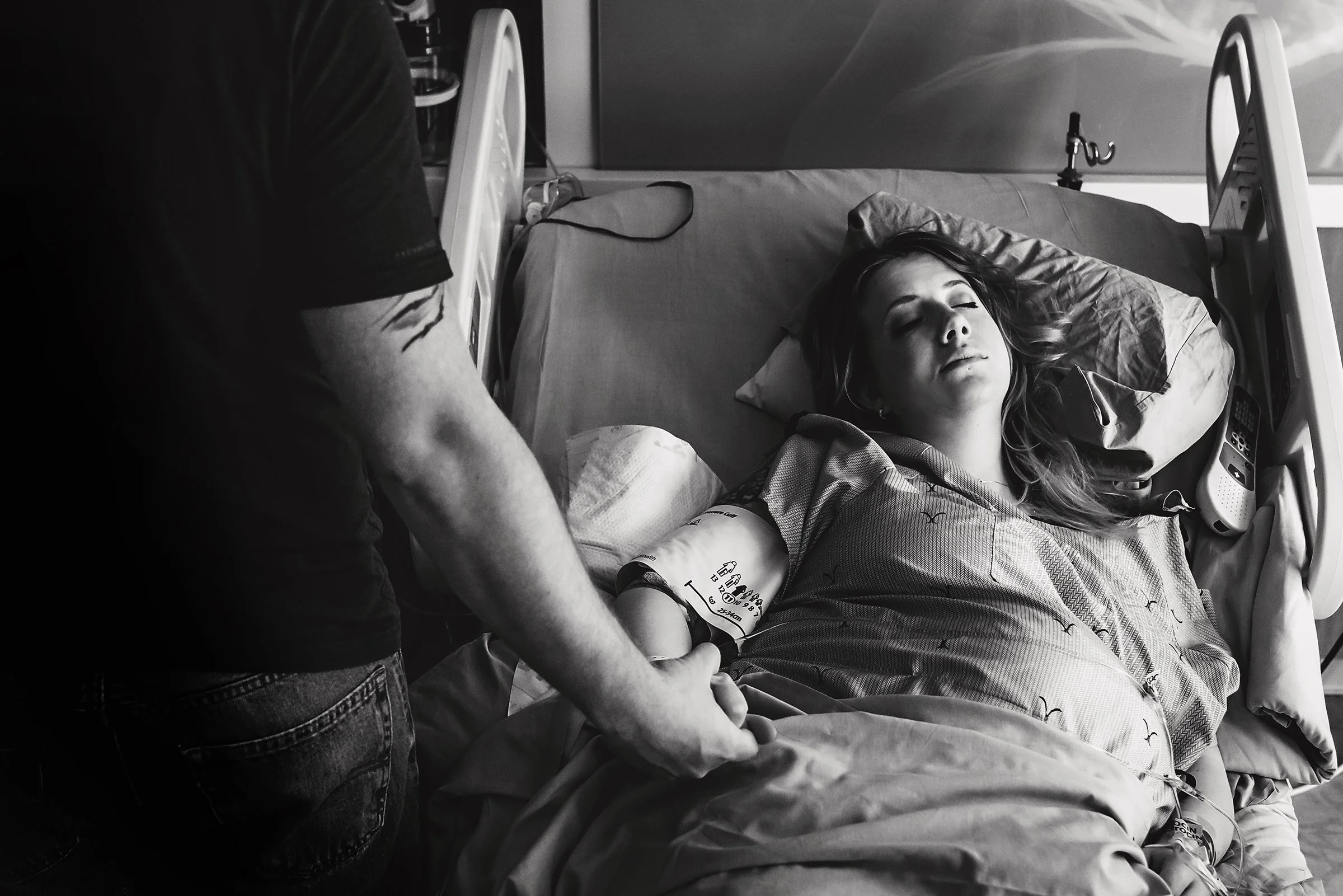
Active labor is when contractions usually become longer, stronger, and closer together. This is often when your focus turns inward and you need more support.
You may no longer want to talk through contractions. You may need touch, counter-pressure, rhythmic breathing, hip squeezes, encouragement, or help changing positions.
This is also often the time when many people go to their birth place, if they are birthing in a hospital or birth center.
What is happening in your body:
Your cervix is opening more steadily
Your uterus is working harder
Your baby is moving lower
Your hormones are helping you enter a more instinctive state
Active labor requires support, privacy, and reassurance. This is where a calm birth team can make a huge difference.
Transition: Around 8–10 Centimeters
Transition is usually the most intense part of labor. Contractions may feel very close together, and you may feel shaky, nauseous, hot, cold, overwhelmed, or emotional.
Many people say things like:
“I can’t do this.”
“I need help.”
“I want this to stop.”
“I need an epidural.”
“I’m scared.”
These feelings are common in transition. They do not mean you are failing. Often, they mean your body is very close to being fully dilated.
What helps in transition:
Simple, steady encouragement
One contraction at a time
Low lights and quiet voices
Cool cloths
Counter-pressure
Changing positions
Being reminded that this phase is intense but temporary
Transition is not the time for long explanations. It is the time for grounded, calm, direct support.
The Second Stage of Labor: Pushing and Birth
The second stage begins once the cervix is fully dilated and ends with the birth of your baby.
Some people feel an overwhelming urge to push right away. Others need time for the baby to descend before pushing begins. This is especially common with an epidural.
Pushing can feel powerful, intense, relieving, or surprising. You may feel pressure in your bottom, stretching, burning, or the sensation of needing to poop. These are all normal sensations.
Positions for pushing may include:
Side-lying
Hands and knees
Squatting
Supported sitting
Kneeling
Using a birth bar
Semi-reclined
The best pushing position depends on your body, your baby’s position, your energy, and whether or not you have an epidural.
This stage is not just about force. It is about working with your body, your breath, your baby, and your pelvis.
The Third Stage of Labor: Birth of the Placenta
After your baby is born, your body still has one more job: birthing the placenta.
This usually happens within minutes to about an hour after birth. You may feel mild contractions again, but they are usually much less intense than labor contractions.
During this time, many providers support immediate skin-to-skin, delayed cord clamping, and the first opportunity for breastfeeding or chestfeeding if desired.
What is happening:
Your uterus continues contracting
The placenta separates from the uterine wall
Your care team monitors bleeding
Your baby begins transitioning to life outside the womb
This stage is also part of birth and deserves gentleness, privacy, and support.
The Fourth Stage: The First Hours After Birth
Many people do not realize that the first few hours after birth are sometimes called the fourth stage of labor.
This is a sacred and important time. Your body is flooded with hormones. Your baby is alert and adjusting. Your uterus is contracting down. Your nervous system is beginning to process what just happened.
This is the time for warmth, bonding, nourishment, support, and protection.
Labor Is More Than Dilation
It is easy to think of labor as a simple timeline: 1 centimeter, 5 centimeters, 10 centimeters, baby.
But birth is much more complex than that.
Your baby is rotating.
Your cervix is softening and opening.
Your uterus is contracting and resting.
Your hormones are shifting.
Your nervous system is responding.
Your emotions are moving.
Your identity is changing.
Labor is physical, but it is also emotional, hormonal, and deeply human.
How to Prepare for Labor
The best birth preparation goes beyond memorizing the stages of labor. It helps you understand your body, prepare your nervous system, involve your partner, learn comfort measures, ask better questions, and feel more confident in your choices.
When you understand what is happening during labor, it becomes less mysterious. You can meet each stage with more trust, more support, and more tools.
Birth cannot be fully controlled, but you can be deeply prepared.
How I Help Families Prepare
One of the biggest misconceptions about childbirth education is that it’s only about coping with contractions.
In reality, preparation starts long before labor begins.
You could spend months reading pregnancy books, listening to birth podcasts, searching Reddit, and piecing together advice from dozens of different sources.
Or you could have one thoughtfully curated resource that brings it all together. That's why I created this resource library and companion workbook.
It brings together the most valuable lessons from evidence-based research, trusted books, professional trainings, clinical experience, and holistic traditions into one thoughtfully curated, easy-to-follow guide.
Reading information is one thing. Applying it to your own pregnancy, birth, and family is another. That's why every roadmap includes a thoughtfully designed companion workbook to help you turn knowledge into action. As you move through each chapter, you'll find guided exercises, reflection prompts, planning worksheets, checklists, and space to organize your thoughts, questions, and preferences.
From understanding your nervous system and navigating medical decisions to preparing your relationship, protecting your postpartum recovery, and understanding your newborn, this is the resource I wish every family had before welcoming a baby.
Less searching. Less second-guessing. More confidence in the journey ahead.
[Discover the Book & Workbook →]
About Ash Novickas
Ash Novickas is a Los Angeles based birth and postpartum doula, lactation specialist, newborn care specialist and educator. Through her practice, Earthside Holistic L.A.,She offers Ayurvedic and holistic maternal recovery and newborn care postpartum, and supports families across Los Angeles with comprehensive birth preparation, evidence-based education and trauma-informed birth support. Ash’s work extends beyond physical support to include emotional and identity transition into motherhood. She guides families through Matrescence- the profound psychological and relational transformation of becoming a mother- helping clients feel grounded, supported and deeply met through every stage of pregnancy, birth and early parenthood.