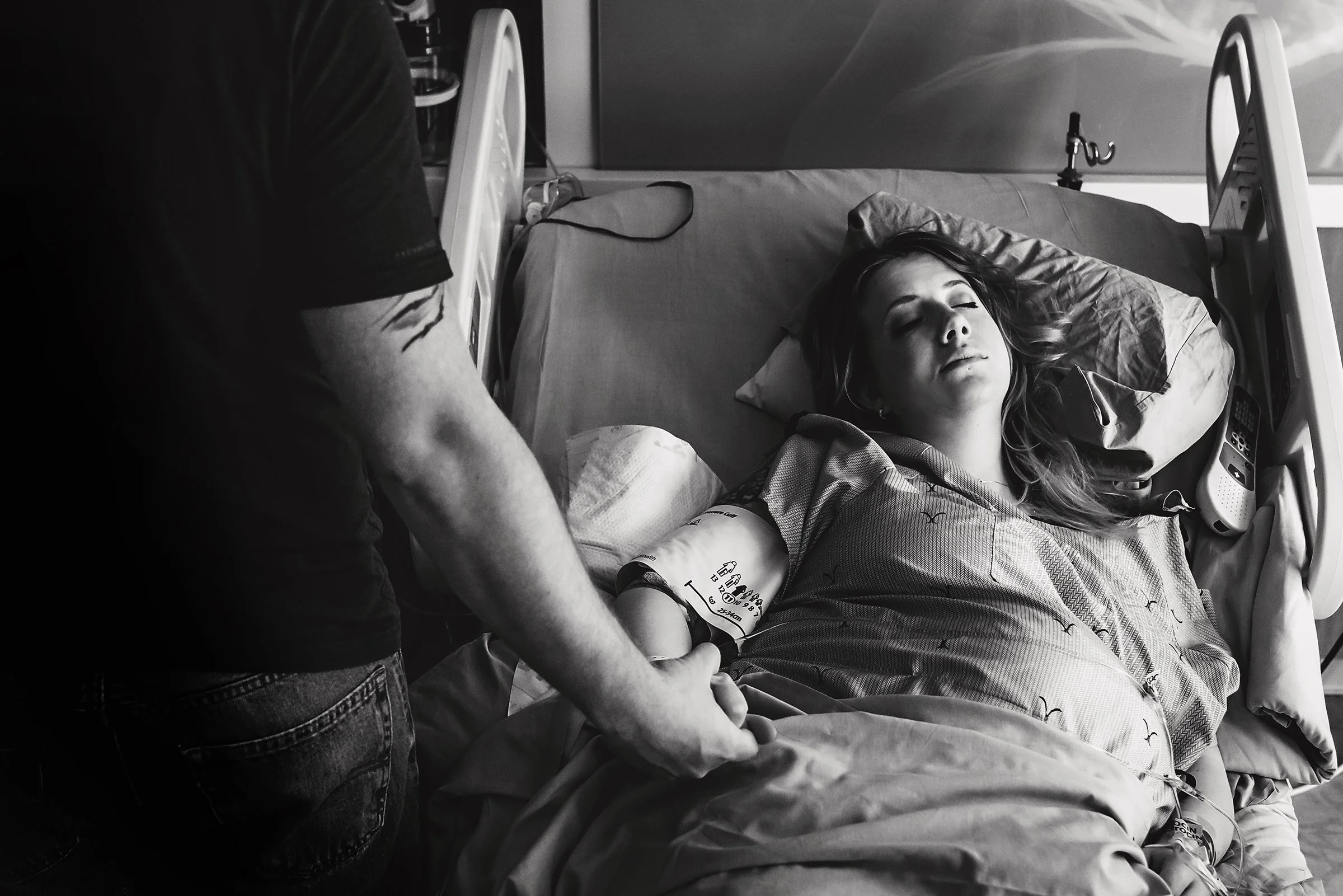
What Is Physiologic Birth? How to Support Birth Physiology in a Hospital
The phrase physiologic birth is appearing more frequently in conversations about childbirth, but it is often misunderstood.
Physiologic birth does not mean home birth.
It does not necessarily mean unmedicated birth.
And it does not mean rejecting doctors, hospitals, epidurals, inductions, or cesareans.
Physiologic birth simply begins with an understanding that labor and birth are biological processes driven by hormones, the nervous system, uterine contractions, maternal movement, fetal positioning, and a complex feedback loop between the body and the environment.
Supporting physiology means allowing those systems to work whenever it is safe and appropriate to do so, while using medical care when it is needed or desired.
What Happens During Physiologic Labor?
Labor involves a complex interaction between several hormones.
Oxytocin helps stimulate uterine contractions.
Endorphins help the body cope with increasingly intense sensations.
Catecholamines such as adrenaline play different roles throughout labor and become particularly important near birth.
These hormones do not operate separately from the nervous system or environment.
Humans give birth inside a social and sensory environment.
Lighting, noise, privacy, fear, unfamiliar people, physical touch, feeling watched, medical procedures, support, and communication can all influence how safe or threatened someone feels.
That is one reason the birth environment matters.
Supporting Physiology Does Not Mean Avoiding Medicine
A physiology-first approach asks a simple question:
How can we preserve as much normal birth physiology as possible while also using appropriate medical care?
Sometimes the answer may involve very few interventions.
At other times it may involve:
an induction
IV fluids
continuous fetal monitoring
an epidural
Pitocin
antibiotics
assisted vaginal birth
cesarean birth
The presence of an intervention does not mean physiology has disappeared.
There are almost always ways to continue supporting the body.
Someone with an epidural can still change positions.
Someone having an induction can still dim the lights, protect sleep, eat when permitted, rest during early cervical ripening, use a peanut ball, receive massage, and create privacy.
Someone preparing for cesarean birth can still discuss delayed cord clamping, immediate skin-to-skin when possible, partner involvement, and early feeding support.
Physiology and medicine do not have to be opposing philosophies.
Movement Matters
One of the simplest ways to support labor physiology is movement.
Changing positions can help create more space within the pelvis and may help the baby navigate through it.
That might include:
walking
leaning forward
hands-and-knees
side-lying
lunges
squatting
kneeling
sitting on a birth ball
using a peanut ball with an epidural
asymmetrical positions
There is no single “best” labor position.
The position that feels right may change repeatedly throughout labor.
A useful birth environment gives the birthing person the freedom to respond to what their body is asking for.
Protect the Hormonal Environment
People often imagine childbirth as primarily a mechanical event: the cervix dilates, the baby descends, and eventually the baby is born.
But birth is profoundly hormonal.
Creating an environment that supports oxytocin can sometimes be surprisingly simple.
Dim lights.
Reduce unnecessary interruptions.
Keep voices low.
Create privacy.
Use familiar music.
Limit unnecessary questions during contractions.
Encourage affectionate touch if it feels good.
Help the birthing person feel safe, supported, and respected.
These things may appear small, but they communicate something important to the nervous system:
You are safe enough to keep going.
Avoid Measuring Labor Too Rigidly
Labor does not always progress in a perfectly linear pattern.
Cervical dilation can speed up, slow down, or temporarily appear to plateau.
A birthing person may remain at one measurement for some time and then change quickly.
This is one reason a cervical exam provides useful information but does not tell the entire story of labor.
Other factors matter too:
contraction strength and pattern
fetal position
fetal station
maternal energy
whether the baby is rotating
whether membranes are intact
maternal and fetal well-being
the overall labor pattern
When mother and baby are stable, sometimes the most useful intervention is simply time.
Use Interventions Thoughtfully
Medical interventions can be extremely valuable.
The important question is not whether an intervention is inherently “good” or “bad.”
The more useful questions are:
Why are we considering this?
What problem are we trying to solve?
How urgent is the situation?
What are the potential benefits?
What are the potential downsides?
Are there other reasonable options?
What could happen if we wait?
For example, Pitocin can be incredibly useful when contractions need support.
Breaking the waters can sometimes help labor progress.
Continuous monitoring can provide important information when there are specific risks or concerns.
An epidural can allow someone who is exhausted or overwhelmed to rest.
The goal is not to avoid intervention at all costs.
The goal is thoughtful, individualized use.
Create Space for the Baby to Move
Birth is not just something happening to the mother.
The baby is actively navigating the pelvis.
Babies flex, rotate, descend, and change position throughout labor.
Sometimes what looks like slow progress is actually a baby working through that process.
Position changes, movement, pelvic mobility, side-lying positions, hands-and-knees, lunges, and asymmetrical positions may help create different shapes within the pelvis.
This is one reason simply lying in one position for many hours may not be ideal when alternatives are available.
Protect Rest
Another overlooked part of physiologic birth is conserving energy.
Especially during early labor or the beginning of an induction, there can be a temptation to “do something.”
Walk the halls.
Bounce on the ball.
Climb stairs.
Try every technique.
Sometimes the most physiologic choice is rest.
Labor may require many hours of physical work.
Eating when appropriate, drinking, sleeping, lowering stimulation, and conserving energy early can become incredibly valuable later.
Your Nervous System Is Part of the Birth
The nervous system is one of the most important pieces of birth physiology.
Feeling afraid does not mean labor will stop.
Feeling anxious does not mean you are doing anything wrong.
And no one needs to remain perfectly calm in order to give birth.
What helps is having ways to move between activation and regulation.
That might mean leaning into your partner.
Hearing your doula remind you that what you are experiencing is normal.
Closing your eyes.
Making low sounds.
Getting into warm water.
Breathing slowly after a contraction.
Changing the lighting.
Asking everyone to stop talking.
Feeling informed about what is happening.
Sometimes regulation comes not from a breathing technique but from finally understanding what is going on.
You Can Support Physiology in a Hospital
A hospital birth and a physiologic birth are not mutually exclusive.
Many families choose hospital birth because they value access to obstetric, anesthetic, surgical, and neonatal care.
You can appreciate those resources while also creating conditions that support normal birth physiology.
You can ask for:
freedom to move when medically appropriate
wireless monitoring when available
dim lighting
fewer interruptions
position changes
a birth ball or peanut ball
time to discuss nonurgent decisions
pushing positions that feel instinctive
delayed cord clamping when appropriate
immediate skin-to-skin when possible
Small choices can preserve a surprising amount of autonomy and physiology.
A Physiology-First Approach to Birth
The goal is not to prove that you can give birth without help.
The goal is not to reject medical care.
And the goal is certainly not to create another standard women feel they have failed if their birth requires intervention.
A physiology-first approach simply recognizes that birth is something the body is already trying to do.
Whenever possible, we can begin by supporting that process.
Then, when medical care becomes useful or necessary, we can bring it in thoughtfully.
This philosophy runs throughout the pregnancy, birth, postpartum, breastfeeding, and newborn guide and workbook I created for expecting families.
The book explores not only what happens during birth, but how the nervous system, hormones, environment, movement, medical decisions, advocacy, partner support, postpartum healing, feeding, newborn behavior, and matrescence all fit together.
Because understanding birth is powerful.
But understanding how to work with birth is something different entirely.
How I Help Families Prepare
One of the biggest misconceptions about childbirth education is that it’s only about coping with contractions. In reality, preparation starts long before labor begins.
You could spend months reading pregnancy books, listening to birth podcasts, searching Reddit, and piecing together advice from dozens of different sources.
Or you could have one thoughtfully curated resource that brings it all together.
Drawing on over a decade of experience supporting families through pregnancy, birth, postpartum, breastfeeding, and newborn care, I created this comprehensive guide and companion workbook to help you move beyond information overload and prepare for the journey ahead with confidence.
Inside, you'll find evidence-based education, holistic wisdom, practical tools, thoughtful reflection, and the kind of real-world guidance I share with the families I support.
From understanding your nervous system and navigating medical decisions to preparing your relationship, protecting your postpartum recovery, and understanding your newborn, this is the resource I wish every family had before welcoming a baby.
Less searching. Less second-guessing. More confidence in the journey ahead.
[Discover the Book & Workbook →]
About Ash Novickas
Ash Novickas is a Los Angeles based birth and postpartum doula, lactation specialist, newborn care specialist and educator. Through her practice, Earthside Holistic L.A.,She offers Ayurvedic and holistic maternal recovery and newborn care postpartum, and supports families across Los Angeles with comprehensive birth preparation, evidence-based education and trauma-informed birth support. Ash’s work extends beyond physical support to include emotional and identity transition into motherhood. She guides families through Matrescence- the profound psychological and relational transformation of becoming a mother- helping clients feel grounded, supported and deeply met through every stage of pregnancy, birth and early parenthood.